



From September 6 to 8, 2023, the 7th International Conference on Autoclaved Aerated Concrete (7ICAAC) was held at the Cubex Conference Centre in Prague, the capital of the Czech Republic. The conference coincided with the centennial celebration of the birth of the autoclaved aerated concrete (AAC) industry.
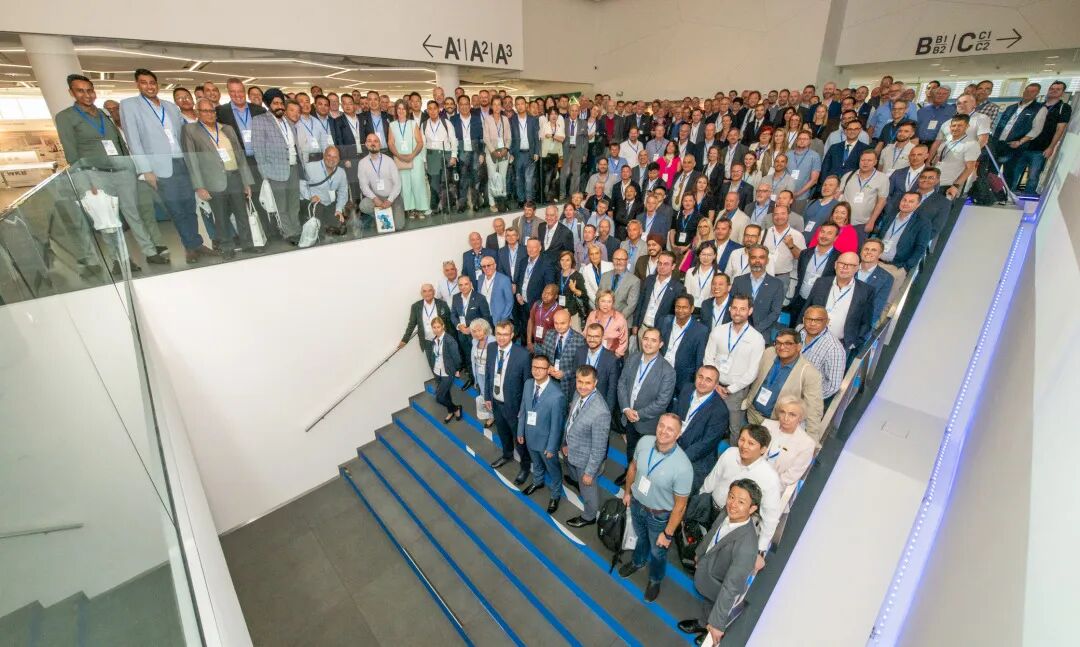
The conference was jointly organized by the European Autoclaved Aerated Concrete Association (EAACA) and the Polish Association of Concrete Producers (SPB). Dongyue Machinery Co., Ltd. participated in and supported the conference as a sponsor.
The International Conference on Autoclaved Aerated Concrete is held every five years. A total of 336 participants from 35 countries and 6 continents attended this conference. Delegates mainly came from Poland, Germany, Australia, China, Argentina, South Africa, India, the United States, and elsewhere.
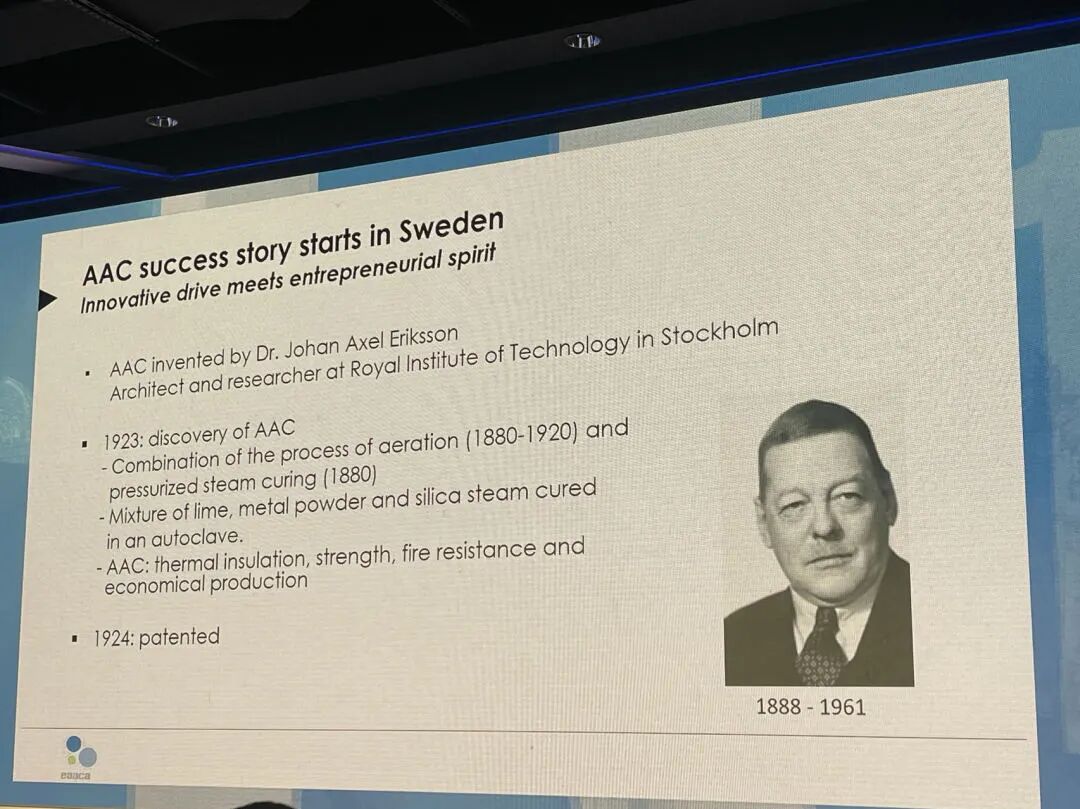
During the three-day conference, representatives from around the world delivered 69 speeches and reports, divided into 11 thematic sessions. Topics covered green low-carbon sustainable development, design, construction, raw material testing, and AAC testing.
Speakers mainly came from universities such as Silesian University of Technology (Poland), University of Parma (Italy), Brno University of Technology (Czech Republic), Saitama University (Japan), Loughborough University (UK), University of Bern (Switzerland), Friedrich-Alexander University (Germany), MEF University Department of Civil Engineering (Turkey), University of Padua (Italy), and the University of Alabama at Birmingham (USA).
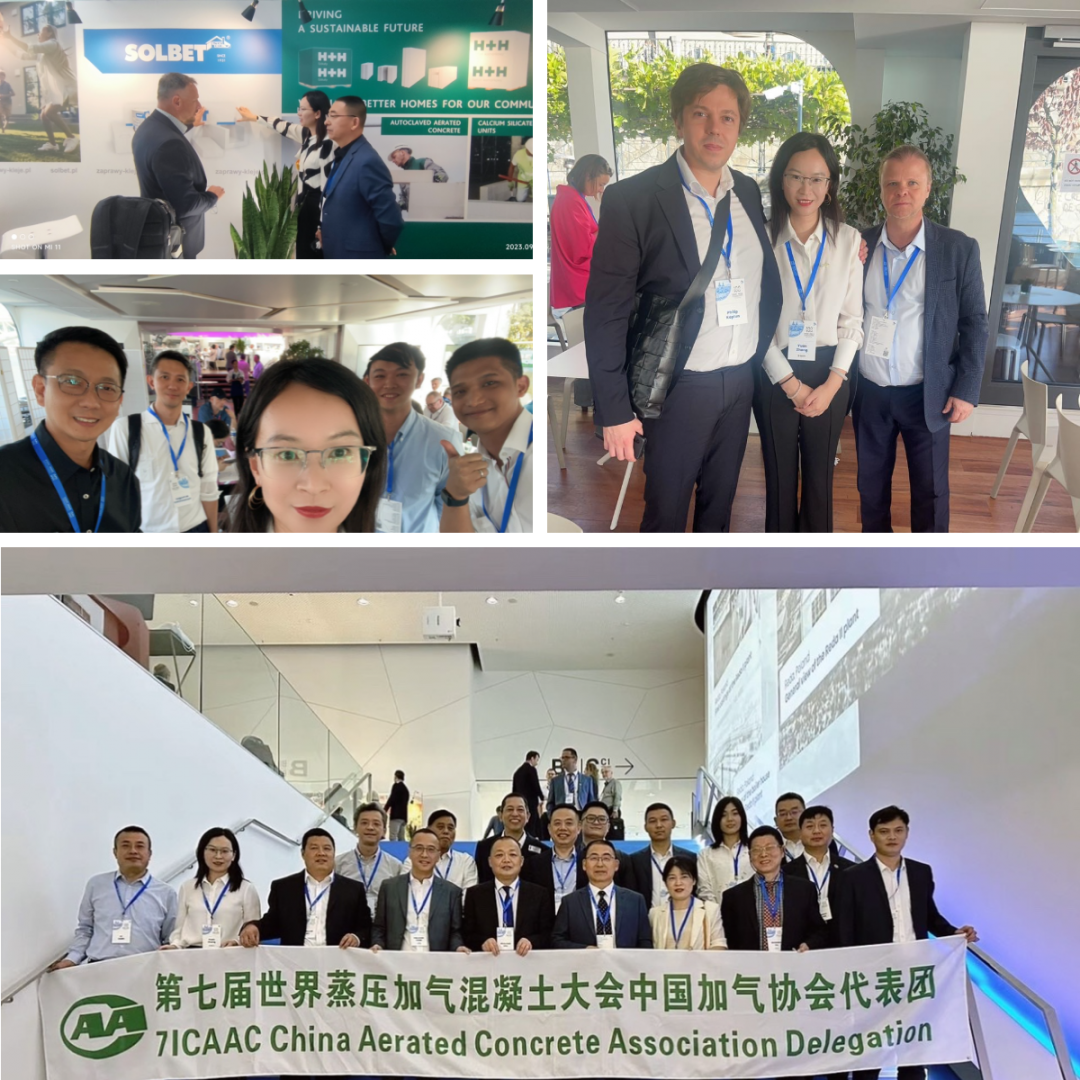
Industry experts giving presentations came from companies including Xella Group, H+H Group, Solbet, Porfix, and Magicrete (India).
The conference shared the development history and trends of the AAC market in some European countries, as well as the wide application of AAC products in European building structures, especially in low-rise residential buildings of three floors or fewer. Using AAC blocks, load-bearing walls in basements, ground floors, and attics are constructed. Using AAC panels, horizontal load-bearing floors on the ground level, horizontal load-bearing floors on attic levels, part of pitched roof structures, and local horizontal load-bearing floors are built.
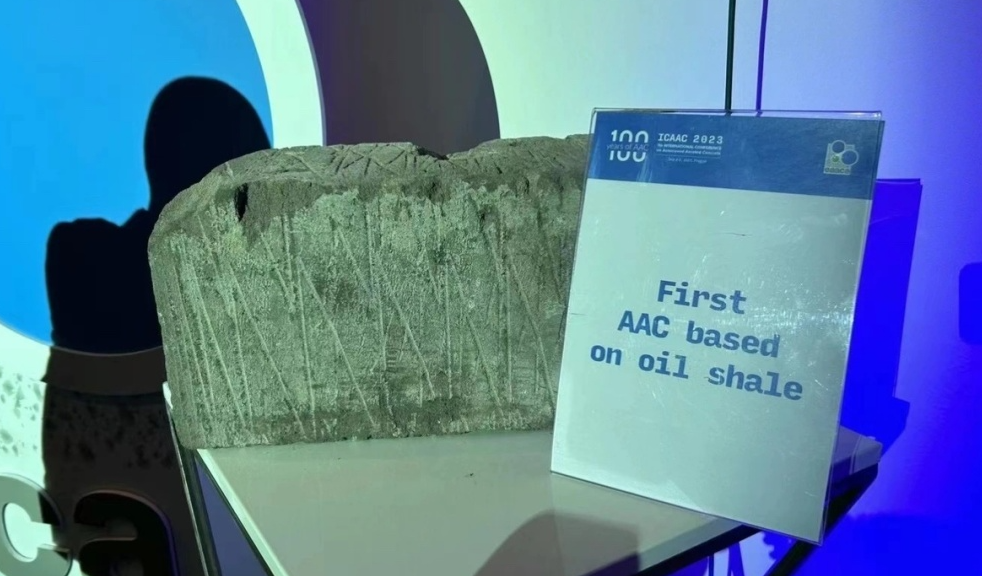
The conference exhibited the first AAC block made from oil shale. For background: Oil shale is a fine-grained sedimentary rock containing significant amounts of organic matter (kerogen). It consists of organic and inorganic components. The organic matter is mainly sapropelic material, sometimes containing incompletely decomposed lower organisms. The inorganic components mainly include quartz, feldspar, clay, carbonates, pyrite, and other mineral particles. Oil shale is primarily used for oil refining and as a chemical raw material. Before the large-scale exploitation of crude oil, oil shale was used as a major mineral energy source for oil refining and chemical production. Currently, oil shale is still widely used for power generation, heating, extracting shale oil, manufacturing cement, producing chemicals, synthesizing building materials, and developing soil enhancers.
